
tokyo sense POP-UP in Paris: When Japanese Creativity Inspires Travel
Key Takeaways
tokyo sense offers a vivid insight into contemporary Japanese creativity and its connections with travel:
- tokyo sense brought together around thirty Japanese creators working across fashion, craftsmanship, design, beauty, and publishing.
- The project highlights how Japanese sensibilities and craftsmanship continue to evolve, adapting to contemporary lifestyles.
- The pop-up gave European exposure to brands that are still little known, while fostering a creative dialogue between Tokyo and Paris.
- Each creation tells the story of its craft, offering an invitation to discover Japan's craftspeople, and culture from a different perspective.
Japan in Paris
In Paris, Japan is not discovered solely through its cuisine, woodblock prints, or best-known traditions. It also reveals itself in the cut of a garment, the texture of a ceramic piece, the delicacy of hand-blown glass, or the subtle fragrance of incense. This is precisely the multifaceted vision of the country – where craft heritage meets modernity – that the project brought to life by creating a direct dialogue between Tokyo and Paris.
Designed for enthusiasts of Japanese culture, fashion and design professionals, and curious visitors looking for fresh inspiration and new places to explore, the event brought together fashion, craftsmanship, beauty, jewellery, design, and publishing. More than a retail space, tokyo sense offered visitors the chance to discover brands still little known in Europe, enjoy a fully immersive sensory experience and encounter Japanese craftsmanship that continues to evolve. It provided a tangible way to understand how Japan's creative scene now operates in an international context – and, for many, served as a gateway to a deeper, more authentic journey through Japan.
©LUMINE
When Tokyo Meets Paris
The choice of Paris was no coincidence. As an international fashion capital, the city has a similar ability to bring heritage and innovation, time-honoured expertise, and new forms of creative expression together.
During Paris Fashion Week in June 2026, tokyo sense took over a space in Le Marais, a district where historic architecture sits alongside galleries, independent boutiques, cafés, and design studios. In this naturally creative setting, the Japanese objects were not presented as static relics of a distant culture. Instead, they found their place in a decidedly contemporary European environment.
Teruyuki Omote, President and CEO of LUMINE, explains: "Paris is a city where tradition and innovation coexist. As a global fashion capital, it places great value on history, culture, and craftsmanship."
These values echo the sensibility tokyo sense seeks to share: close attention to the materials, details, and techniques that bring objects to life. Fashion Week also enabled the project to reach both the Parisian public and an international community of professionals, buyers, and journalists.
For LUMINE, this first step into Europe therefore represents more than a straightforward commercial expansion. It opens up a conversation between Tokyo and Paris, and between different ways of making, thinking, and shaping everyday life.
"Timeless and Evolving": Tradition in Motion
tokyo sense is built around one central idea: "Japan Sustain – Timeless and Evolving".
"Timeless" evokes values that endure: precision in craftsmanship, the pursuit of balance, respect for materials, and close attention to the way objects are used in everyday life.
"Evolving" reminds us that these traditions never stop changing. Japanese craftspeople and designers adapt techniques inherited from the past to contemporary lifestyles, experiment with new processes, and imagine new ways to pass on their expertise.
This question of passing knowledge on is particularly important today. Many Japanese workshops face a shortage of successors, while small brands often encounter logistical and commercial challenges when seeking to expand abroad.
By bringing these creators together in Paris, tokyo sense offers them a shared space where new audiences can discover, observe, and understand their work. The project does not present tradition as something unchanging. Instead, it shows how Japanese creativity embraces a contemporary outlook and can become a natural part of life today.
©LUMINE
Japanese Brands Still Little Known in Europe
The pop-up was conceived as an internationally focused curated selection, created in collaboration with ANDREAS MURKUDIS, who is known for his discerning approach to fashion, design, and curation.
From his Berlin store, ANDREAS MURKUDIS has long maintained a close relationship with Japanese creativity. He showcases around forty Japanese brands there and had wanted for several years to raise their international profile and introduce them to a wider audience.
For ANDREAS MURKUDIS, tokyo sense offered an opportunity to make brands that remain relatively little known in Europe – or are entirely absent from the European market – more visible and accessible to European audiences.
The selection was not confined to a single category. Fashion, jewellery, homeware, books, fragrances, and ceramics came together to create a richer panorama of contemporary Japanese creativity. This approach also helped move beyond any single or stereotypical view of Japanese design.
Each brand must nevertheless be able to stand on its own. ANDREAS MURKUDIS explains that he must be able to fully stand behind every one of them: the quality of its products, its expertise and craftsmanship, and the integrity of its design.
A Pop-up Store Designed as a Journey
Inside tokyo sense located at 16 rue des Minimes, white walls, wooden floors, and natural light created a deliberately understated setting. Clothing, shoes, fragrances, jewellery, ceramics, glassware, and art books could all be appreciated in the finest detail. The event ran from 14 June to 7 July 2026.
This understated setting brought the full diversity of contemporary Japanese creativity to the fore. Conceived as a journey through the space, it allowed visitors to discover very different approaches united by the same exacting standards: respect for materials, precision in production, and a commitment to keeping traditional expertise alive today.
Fashion provides a striking example. At ATON, every garment is considered from the raw material through to its final form, with particular attention paid to comfort, structure, and durability. BATONER carries forward the textile heritage of Sagae in Yamagata Prefecture, reinterpreting Japanese knitwear through contemporary silhouettes. Elsewhere, IKIJI brings the spirit of iki – a restrained, understated aesthetic inherited from the Edo period – into the modern wardrobe.
Without setting tradition and modernity in opposition, tokyo sense therefore shows how Japanese creators transform craft heritage into objects and garments made for contemporary life, while providing a meeting place for creators and visitors.
©LUMINE
Traditional Craftsmanship Meets Contemporary Design
The objects subtly illustrate how Japanese creators are developing age-old techniques without losing their essence.
Hasami porcelain from Nagasaki Prefecture is being reinvented through more playful, contemporary forms, while Maison Koichiro Kimura brings centuries-old lacquerware expertise into dialogue with modern technology.
The same approach can be seen in the use of washi paper, which MAISON ITOI transforms into a lightweight, breathable, and durable textile designed to fit naturally into contemporary life.
From ceramics to clothing, tokyo sense shows that Japanese craftsmanship does more than preserve the past: it continues to renew itself, explore new possibilities, and find its place in contemporary life.
©LUMINE
A Sensory Journey Thanks to tokyo sense
The tokyo sense experience is not purely visual: it can also be explored through touch, scent, and everyday life. AOIRO's fragrances, composed from natural botanical essences, embody this sensitive approach, in which the air itself becomes a way of connecting people to a place.
This attentiveness extends to the art of incense, which SHOYEIDO has preserved in Kyoto using techniques passed down since the early 18th century. Here, the fragrance is never overpowering: it subtly accompanies everyday moments and lends them a greater sense of calm.
Even an object as familiar as a drinking glass can become an experience in its own right. Creations by KIMURA GLASS, some of which are hand-blown to less than one millimetre thick, combine lightness, functionality, and minimalism.
Through these creations, tokyo sense reveals a Japanese sensibility in which refinement lies in the details and in the way objects accompany everyday life.
©LUMINE
Le Marais and Rue des Minimes: A Gateway to Japan
The tokyo sense experience extended beyond the doors of the pop-up. The Paris map created for the project listed shops, showrooms, restaurants, cafés, and other places across the capital connected to Japanese culture and creativity.
It turned Paris into a cultural itinerary in its own right. A visit to the pop-up could continue through the streets of Le Marais – over a Japanese meal, in a design boutique, or by discovering another brand from Tokyo.
The map thus became much more than a simple catalogue. By connecting objects, stories, and places, it encouraged exploration and curiosity. It could also serve as the starting point for themed trails, cultural visits, or experiences offering a taste of Japan in Paris.
From Cultural Discovery to Travel
Fashion, craftsmanship, and design have the power to transport us long before we board a plane.
A ceramic piece may inspire a visit to the workshops of Hasami. A knitted garment may lead all the way to Yamagata. Incense may spark curiosity about Kyoto's craftspeople. Behind every object lies a place, a community, and a story that travel allows us to experience in a different way.
JTB Corp. was among the project's sponsors alongside Tokyo Tokyo, while a Japanspecialist video was shown in the space. This involvement naturally extended the dialogue begun by tokyo sense: after discovering the objects and stories shaping contemporary Japan in the heart of Paris, why not travel to meet the places and people behind them?
At Japanspecialist, we see travel as an opportunity to understand a country beyond its most famous sights. Visiting Japan also means stepping into a workshop, recognising a region's role in producing a textile, observing a craftsperson's gestures, or discovering how a tradition continues to evolve from one generation to the next.
Ready to start planning your future trip? Book an online appointment with our experts!
The Beginning of a New Dialogue
tokyo sense was not conceived as a one-off event. For LUMINE, this first edition was intended to build lasting relationships, open up new possibilities within a long-term project, and help Japanese designers and craftspeople reach an international audience. As Teruyuki Omote emphasises: "Success is defined not only by sales, but by the quality of the exchanges."
©LUMINE
The project's true impact therefore also lies in the encounters it created, the curiosity it inspired among visitors and professionals, and the opportunity for these forms of expertise to remain alive and continue evolving, with a future programme of exchanges and exhibitions taking shape in the background.
From Tokyo to Paris, and then from Paris to the rest of Europe, a new exchange is beginning to take shape, with the ambition of reaching a wider European audience through future exhibitions. It is an exchange in which a garment, a fragrance, or a handcrafted object can become the first chapter of a much greater journey.
Plan your trip with us
Get in touch with one of our travel consultants, they are ready to help you create the trip you always dreamed of.
Online Consultation
Tattoos have long been a taboo in Japan, largely due to their historical association with the yakuza. However, with the right information and a bit of planning, it’s […]

If you’re used to travelling in Europe or other countries where English is common, you might expect the same from Japan. And while English is learnt in Japan, it is […]
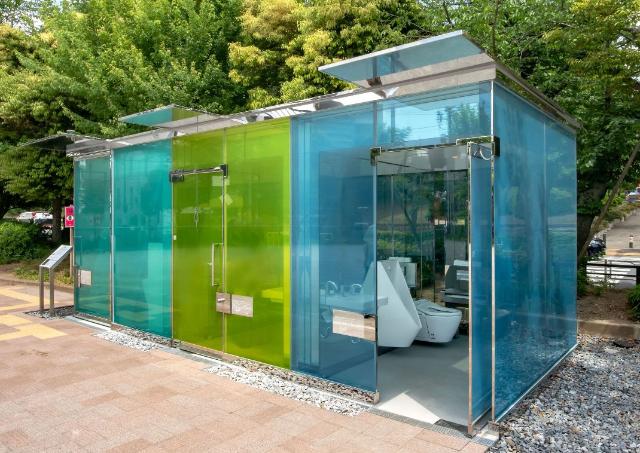
In a quiet and contemplative production that seems an unlikely subject for a story, Wim Wenders movie "Perfect Days" talks about Hirayama (Kōji Yakusho) a cleaner of […]